Prepare your mixture
Get the mixture you want to strain ready first. If you are making plant milk, do the soaking and blending before the sack becomes involved. Chaos is not an ingredient.
Put the bag over a bowl or jug, pour in your prepared mixture, then lift and squeeze gently. The Nut Sack holds back the pulp while the liquid strains through. Afterwards, empty it, rinse it and let it dry properly. That is really the whole magnificent operation.
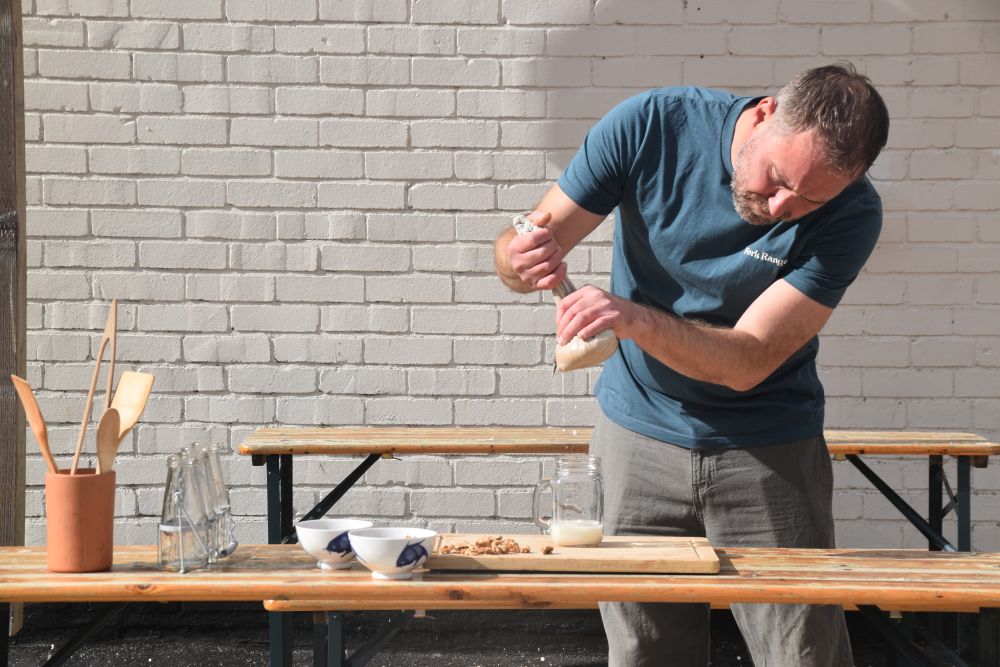
Prepare whatever you are straining. Open the bag over a suitable container. Pour slowly. Lift it up. Squeeze gently. Empty the pulp. Rinse the bag and dry it completely before putting it away. No machinery. No app. No degree in sack management.
The same basic method works whenever you need to pour a mixture through the bag, keep the solids inside and collect the liquid underneath.
Get the mixture you want to strain ready first. If you are making plant milk, do the soaking and blending before the sack becomes involved. Chaos is not an ingredient.
Open The Nut Sack over a large bowl, jug or pan. Give yourself enough room to pour without trying to balance six things at once.
Pour the mixture into the open bag in a steady, controlled way. Slow is good. Slow keeps most of the contents in the intended part of the kitchen.
Lift the bag clear of the collected liquid and squeeze gently from the top down. Your hands do the squeezing; the sack keeps the bits under control. Do not wring it like it owes you money.
Turn out whatever has been left behind. Depending on what you strained, the pulp may be useful elsewhere or it can go into your compost rather than being abandoned inside the bag.
Rinse the bag promptly, wash it gently when needed, then hang it open until it is completely dry. The last part matters. Damp sacks are not the dream.
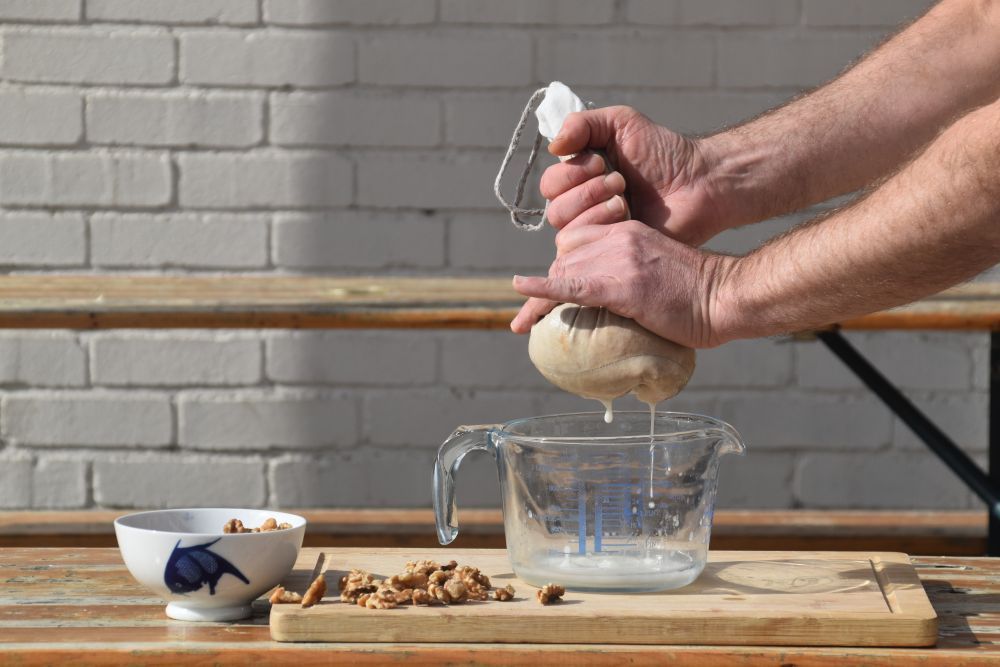
Once most of the liquid has drained naturally, gather the top of the bag and work downwards with your hands. A steady squeeze is normally all that is required.
Crushing, twisting and heroic acts of violence are unnecessary. The aim is to separate the liquid from the pulp, not establish dominance over a piece of hemp.
Hemp is wonderfully practical, but old dried pulp is still old dried pulp. Deal with the bag while everything is fresh and life becomes considerably easier.
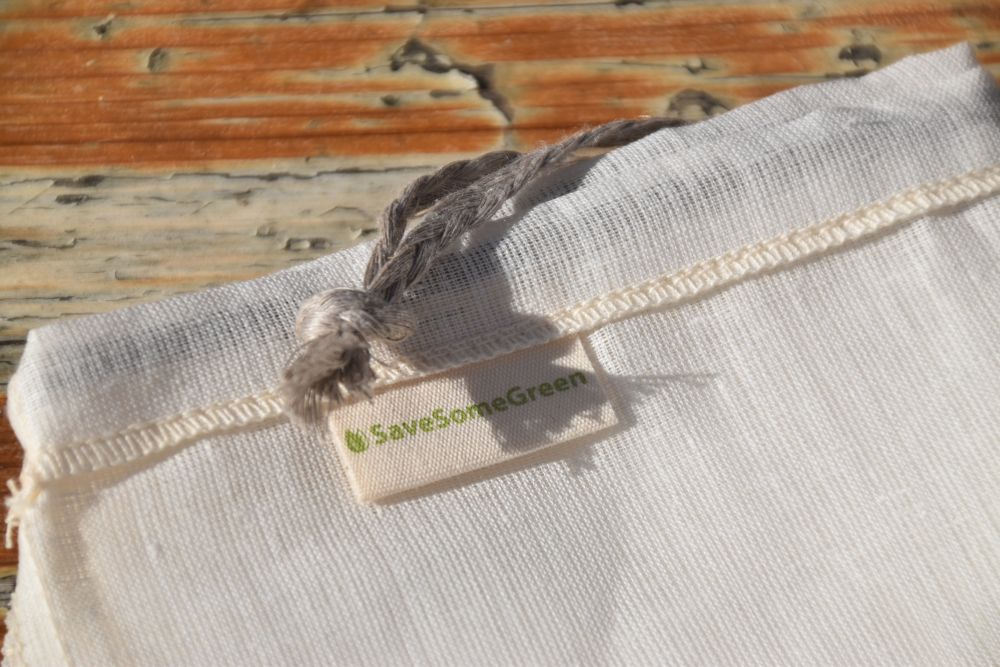
Remove the pulp as soon as you have finished straining rather than leaving it packed against the fabric.
Turn the bag inside out and rinse away the remaining particles under clean running water.
Wash gently when needed and rinse thoroughly so there is no soap or old food residue waiting for your next experiment.
Hang the bag open somewhere with good airflow and leave it until the fabric is properly dry.
This is the big care rule. Clean it promptly and let it dry fully before it goes into a cupboard or drawer. Do not leave pulp sitting inside it, do not bundle it up wet, and do not create a tiny organic-hemp swamp in the back of your kitchen.
Keep this page about using the bag. Recipes and the stranger things you can strain have their own homes.
Get the ingredients, blending and homemade plant-milk method on the dedicated recipe guide.
See the dedicated uses guide for the other jobs a reusable straining bag can get up to.
Gently and steadily. Start at the top of the filled bag and work downwards with your hands. You want enough pressure to release the liquid without aggressively twisting or wringing the fabric.
Yes. Empty the pulp promptly and rinse the bag before residue has time to dry into the fabric. Turn it inside out so trapped pieces are easier to remove.
No. Let it dry completely first. Store it clean and dry rather than folding a damp bag into a cupboard and hoping for the best.
Yes, the basic pour-and-strain method is the same, although the preparation and blending technique can differ. See our nut milk making guide for the recipe side rather than duplicating it here.
The Nut Sack is sold through Save Some Green. Buying and checkout happen over there; the ridiculous name comes as standard.
The Nut Sack
We use necessary storage to keep The Nut Sack secure and working. If you allow analytics, Google Analytics helps us understand which pages are useful. We do not use advertising or behavioural tracking cookies.
The Nut Sack
Choose whether you want to allow optional analytics. Necessary website functions and security stay active either way.
Required for security, forms, consent preferences and essential website functions.
Google Analytics helps us understand how the website is used. It is not loaded unless you allow it.
Advertising and behavioural tracking: not used.